Computing


In 'Computing' at Joseph Hood, we use the Kapow schemes of work to support teaching and learning of Computing in The National curriculum. The Kapow Primary Computing scheme of work follows a structured, spiral curriculum model: this is where key knowledge and skills are revisited and built on at a level appropriate to children’s development. This method builds a strong pedagogical foundation, which can be developed further as children progress through primary school.
This ensures learning is:
- Cyclical: Pupils revisit key concepts again and again.
- Increasing depth: Each time learning is revisited, it is covered with greater depth.
- Prior knowledge: Upon returning to each area, prior knowledge is utilised so pupils can build on previous foundations, rather than starting again.
The concept of a ‘spiral curriculum’ is rooted in the work of cognitive psychologist Jerome Bruner, who was interested in developmental psychology and how children learn.
Using a spiral curriculum in teaching does not result in children learning the same concepts over and over again. It’s about using what has already been taught to make connections between new concepts and previously learnt material.
Spiral curriculums help pupils to make connections between different concepts and apply their learning in different contexts; when they return to the concept each time, it is often in a different context. This helps to promote deeper understanding and transfer of learning.
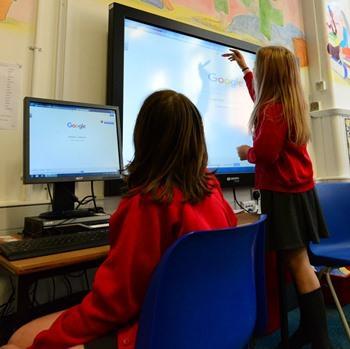
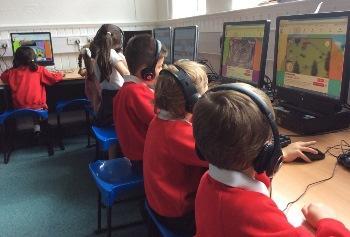
Online safety is a key component of what we focus on when teaching computing at Joseph Hood.
Examples of Computing Knowledge Organisers
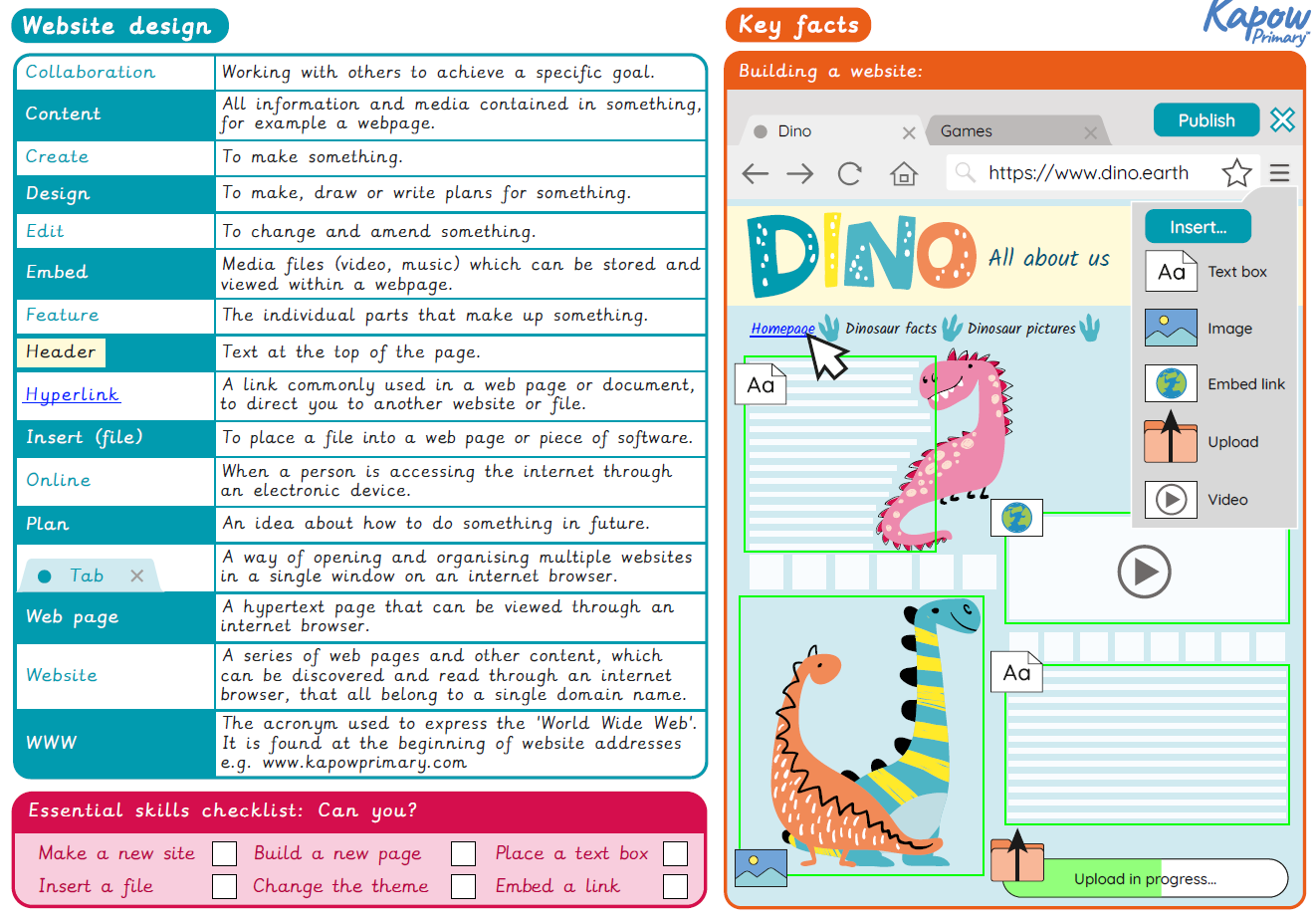
Year 4- Website Design
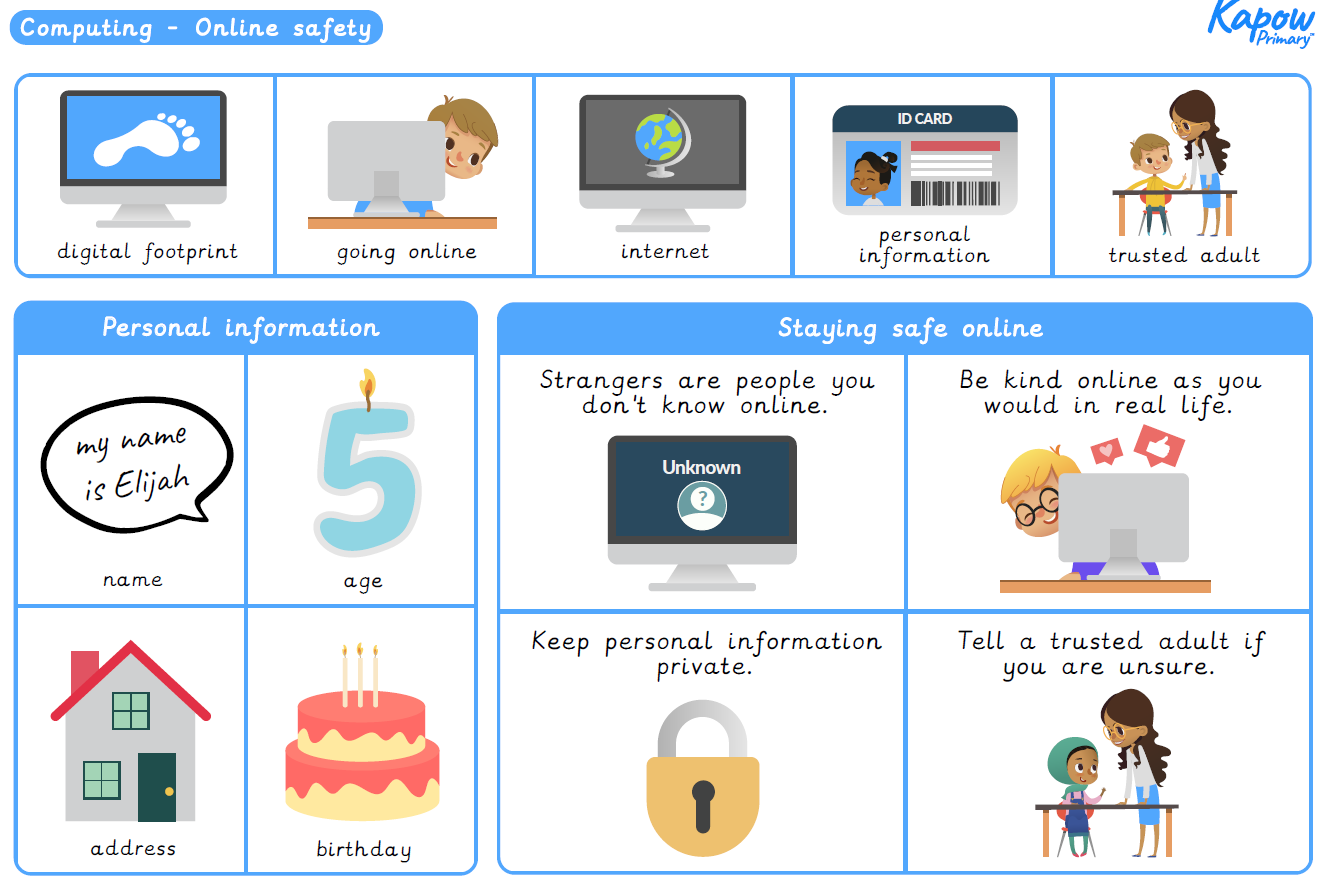
Year 1- Online Safety